
 By
By 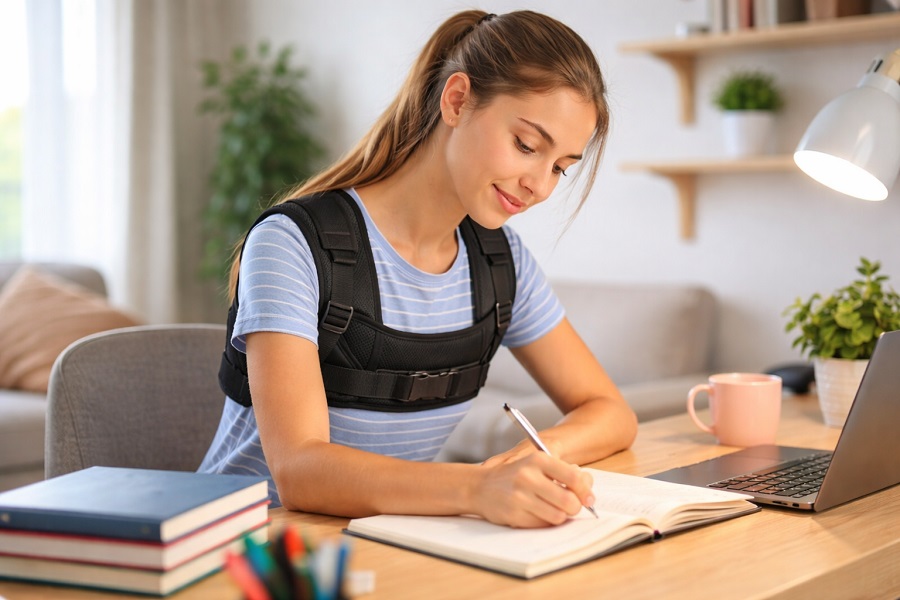
If you are a student, you can understand what long hours of studying mean. Long hours of studying, online classes, and finishing up assignments mean you are stuck in one position for long hours. At first, you might not even notice it, but as time passes, you will realize your shoulders are slouched forward, and your back is bent towards your desk. After your study hours, you will realize your neck is stiff, and your back is tired.
This is a common problem for students today. Long hours of studying and screen time make it easy for anyone to slouch without even realizing it. Long hours of slouching can cause you a lot of pain and discomfort. Using a Posture Corrector Belt can help you correct your posture even during your long hours of studying.
Why Students Often Develop Poor Posture
Heavy Backpacks: Carrying overloaded bags daily strains the shoulders and pulls the upper spine backward, forcing the neck to compensate by leaning forward.
Static Sitting: Spending six to eight hours in rigid classroom chairs leads to muscle fatigue, causing the body to collapse into a slump.
Digital Strain: Constant use of tablets and smartphones creates the tech neck phenomenon, where the head stays tilted at a sharp angle for hours.
Lack of Core Strength: Many students lack the active core engagement needed to hold their torso upright without external help.
Warning Signs Your Posture Needs Attention
Persistent Muscle Knots: Hard and painful bumps in your upper back or between your shoulder blades that do not get better with rest.
Frequent tension headaches: Pain that starts at the base of the skull and moves forward is often caused by a misaligned neck.
Rounded Shoulders: You notice that your shoulders naturally roll forward towards your chest even when you’re standing upright.
Reduced Lung Capacity: You feel like you’re unable to breathe in a deep breath because your rib cage is being compressed by slouching.
How a Posture Belt Helps During Study Hours
Active Alignment: The Posture Correction Belt gently pulls the shoulders back, aligning them with the ears and hips.
Physical Feedback: It acts as a feedback mechanism. When you start to slouch, the straps give you a reminder to sit up straight.
Reduced Muscle Load: It relieves you of the upper body weight, thus protecting you from a burning sensation in the mid-back area.
Open Chest Position: By keeping the chest open, the body posture belt improves oxygen flow, which helps keep the brain alert and focused.
Why Early Posture Correction Matters
When it comes to spinal health, prevention is better than cure. This is the most important health advice for any young learner. For students, the spine and muscles are still flexible and can adjust easily. This is the right time to build good posture habits. Using a Posture Corrector Belt can help keep your spine straight during study hours and prevent posture problems later when you start working. By taking action now, you are ensuring that your body stays flexible and pain-free throughout.
Simple Habits That Improve Posture While Studying
The Eye-Level Rule: Use a laptop stand or a stack of books to ensure your screen is at eye level so you aren’t looking down.
Flat Foot Placement: Keep both feet flat on the floor to stabilise the pelvis and reduce lower back strain.
Micro-Breaks: Follow the 45-minute rule, stand up and stretch for five minutes to restore blood circulation to tired muscles.
Lumbar Support: Place a rolled-up towel under your lower back, so that it keeps your lumbar region naturally aligned.
How to Choose the Right Posture Belt
Discreet Profile: You should always wear a slim belt that is made to be hidden under your uniform so you can wear it with confidence.
Material Quality: You should always look for breathable and moisture-wicking belts of high quality so that you stay comfortable even in a hot lecture hall or a crowded library.
Adjustable Tension: The belt should be of high quality with high-quality Velcro or buckles to enable you to adjust the level of back support throughout the day.
Padded Straps: You should look for a belt with padding around the underarms to prevent chafing and skin irritations.
Tips for Using a Posture Corrector Belt Safely
Gradual Introduction: It is advisable to use the Posture Correction Belt only for 15-20 minutes a day to enable your muscles to get accustomed to it.
Correct Sizing: It is not advisable to use a Posture Corrector Belt of a smaller size as it may interfere with breathing and blood circulation.
Layering: When you wear the body posture belt, it is important to wear it over a thin t-shirt to prevent friction on your skin.
Focus on Sitting: When you use a posture correction belt, it is important to wear it during static activities such as reading or typing to stop slouching.
Common Mistakes Students Should Avoid
Over-Reliance: Don’t wear the belt all day. Your muscles need to learn to support your weight on their own to prevent dependency.
Ignoring Pain: If the belt causes sharp pain or numbness, it is either too tight or the wrong size. Loosen it immediately.
Skipping Exercise: A belt is a tool, not a cure. You still need to perform basic back-strengthening exercises to see permanent results.
Sleeping in the Belt: Never wear a posture belt to bed, as your body needs to move freely and relax during sleep.
Conclusion
You should spend your time as a student learning new things, not hurting your back. A Posture Corrector is a simple, affordable, and useful way to make sure that your study habits don’t cause you long-term physical problems. You can stay focused, feel more energetic, and carry yourself with real confidence if you get the help you need during your busiest times at work.
Don’t wait for the pain to become a permanent distraction. Start supporting your spine today, and your body will thank you for years to come.
Frequently Asked Questions
1. Can I wear the Posture Corrector Belt during a long exam?
Yes, it can help you stay alert and focused by improving your breathing and reducing the physical strain of sitting.
2. How many hours a day should a student wear a posture belt?
Start with 20 minutes and work up to 2 hours. Do not wear it all day, as muscles must remain active.
3. Will a Posture Correction Belt fit under my school uniform?
Most modern designs are very discreet and slim, fitting easily under uniforms or jumpers without being visible.
4. Does the belt help with neck pain from looking at my phone?
Yes, the body posture belt pulls your shoulders back, which helps prevent the forward head tilt common with phone use.
5. Is the Posture Corrector Belt easy to wash?
Yes, most are made of synthetic materials that can be hand-washed with mild soap. Always air-dry them to maintain elasticity.





Comments