
 By
By 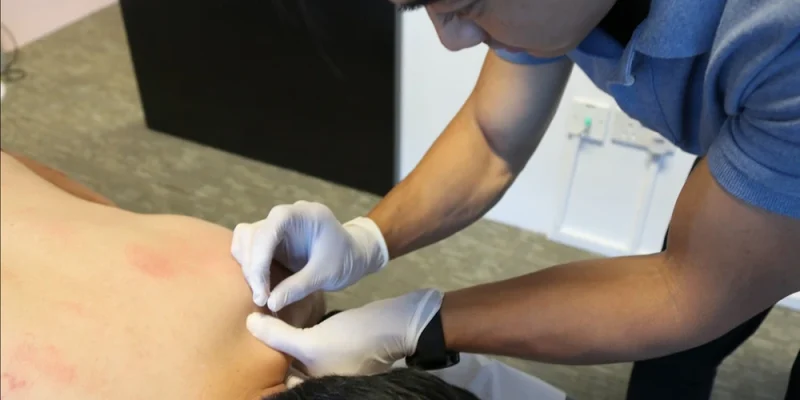
A restricted joint rarely travels alone. By the time someone books an appointment because a shoulder won’t rotate fully or a lower back locks up after a long drive, the surrounding muscles have usually organised themselves around the problem, tightening into a kind of splint that protects the joint but also keeps it stuck. Chiropractic adjustment is built to address the joint side of that equation, restoring the small gliding and rotating movements between vertebrae or other articulations that get lost when posture, injury, or repetitive strain accumulate. Dry needling works on the other half of the picture, the muscle tissue that has been holding the guarded position, sometimes for months without the person noticing until a specific twist or bend brings the discomfort forward.
Where Muscle Meets Joint
Muscles and joints communicate constantly through a feedback loop involving proprioceptors, the sensory receptors that tell the nervous system where a limb or vertebra sits in space and how fast it is moving. When a joint becomes restricted, whether from an old injury, a slouched desk posture held for years, or a single awkward lift, the muscles crossing that joint often develop taut bands and trigger points as a protective response. These bands can refer pain to areas well away from the actual joint, which is why a stiff mid-back sometimes shows up as an ache between the shoulder blades or a tight hip flexor mimics lower back pain. A chiropractor examining the spine or a peripheral joint is trained to read these referral patterns and distinguish a purely mechanical restriction from one that has a strong muscular component driving it.
The Mechanics of a Needle Release
Dry needling uses a thin, solid filament needle inserted directly into a taut muscle band or trigger point, aiming to provoke a local twitch response that interrupts the sustained contraction at that spot. Unlike acupuncture, which is rooted in traditional meridian theory, dry needling is grounded in neuromuscular anatomy and targets the specific tissue causing restriction or referred pain, often guided by manual palpation to locate the exact band. The twitch response itself is a brief, involuntary contraction that signals the muscle fibre is releasing some of its abnormal tension, and it is frequently followed by a noticeable softening of the tissue under the practitioner’s fingers. This localised release can improve blood flow to an area that has been in a low-oxygen, high-tension state, which matters because chronically contracted muscle tissue tends to accumulate metabolic byproducts that keep the discomfort cycle going.
Sequencing Treatment Within a Session
The order in which these two approaches are applied depends on what the initial assessment reveals about which structure is limiting movement. In some cases a chiropractor will identify that a muscle is so tight it is physically blocking the joint from being adjusted safely, so the muscular tension gets addressed first to create room for a cleaner, more comfortable adjustment afterward. In others, the joint restriction is primary and adjusting it first changes the mechanical load on the muscle enough that needling becomes more effective at holding the release. Clinics that run a dedicated dry needling programme alongside chiropractic care are set up to make that judgment call session by session rather than applying a fixed protocol regardless of presentation, which matters because two people with the same complaint of neck stiffness can have very different underlying tissue states.
Common Conditions That Respond Well
Neck and upper back tension from hours spent looking at a laptop or phone screen is one of the more common presentations seen in office-dense parts of Singapore, where long commutes on the MRT often add another stretch of forward-head posture before and after the workday. Shoulder blade tightness from repetitive mouse and keyboard use, tension headaches originating from tight suboccipital muscles at the base of the skull, and lower back guarding after prolonged sitting all tend to involve a muscular layer that adjustment alone may not fully resolve. Combining the two approaches gives a more complete answer to why the tissue tightened up in the first place rather than only addressing where the joint ended up as a result.
Rebuilding Motion After the Muscle Releases
Once a trigger point has released and the surrounding tissue has softened, the joint it was protecting often has noticeably more room to move, and a chiropractor can achieve a fuller, more precise adjustment than would have been possible when the muscle was still guarded. This is one reason combined treatment plans are often structured across two or three sessions rather than expecting a single visit to resolve a pattern that took months to develop. Each session builds on the tissue changes from the last, gradually restoring both the passive range of motion in the joint and the active control the surrounding muscles have over it, which is what actually keeps the improvement from reversing the moment old habits reassert themselves.
Sensations to Expect Afterward
People new to dry needling sometimes feel a brief, sharp sensation as the needle reaches the taut band, followed by a dull ache or heaviness in the muscle that can last into the next day, similar to the feeling after an unusually demanding workout. Mild bruising at the needle site is possible, particularly in muscles that were holding significant tension, and staying hydrated in the hours afterward tends to help the tissue settle. Gentle movement rather than complete rest is usually encouraged, since the muscle benefits from being taken through its newly available range rather than staying still, and most people find any post-treatment soreness fades within a day or two, leaving the looser, more mobile sensation that prompted them to seek both therapies together in the first place.






Comments